

California is rapidly embracing solar energy, and for good reason! With abundant sunshine year-round, the Golden State has become a leader in solar adoption, with thousands of homeowners switching to renewable energy. As solar power becomes more mainstream, understanding the cost of installing solar panels is essential for homeowners considering this eco-friendly upgrade.
For a 4,000 square-foot home in California, the upfront cost of installing solar panels can vary greatly, depending on several factors. These include the size of the system needed, the type of panels chosen, and various other installation factors. It’s crucial to grasp these costs before making any decisions, as the right solar system can significantly reduce your energy bills and help protect the environment.
Average Cost of Solar Panels for a 4000 Sq Ft House in California
The cost of installing solar panels for a 4,000 square-foot home in California typically falls between $15,000 and $40,000, though it can vary based on specific needs and preferences. Generally, the total cost depends on the number of solar panels required to meet the energy demands of your home, which is influenced by factors like your home’s energy usage, roof space, and panel efficiency.
Cost per Watt: Solar panel costs are often measured in “cost per watt.” This metric is helpful when understanding how much energy you’re getting for the price. In California, the average cost per watt ranges from $2.50 to $3.50, depending on the quality of the panels, the complexity of the installation, and other factors.
A typical system for a 4,000 square-foot home, requiring an estimated 10-12 kW of power, will cost around $20,000 to $35,000 before incentives, depending on your choice of panels and battery storage systems. For homeowners in California, the good news is that the state’s sunny climate means you’ll get significant energy savings long-term, which can help justify the initial investment.

| Panel Type | Estimated Cost Range |
|---|---|
| Monocrystalline | $20,000 – $40,000 |
| Polycrystalline | $15,000 – $30,000 |
| Thin Film | $12,000 – $25,000 |
Factors Influencing the Cost of Solar Panel Installation
Home Size and Energy Needs
The size of your home plays a critical role in determining the number of solar panels needed. A larger home like a 4,000 sq ft house requires more energy, thus needing a larger solar panel system. In general, a home of this size will require a 10-12 kW system to meet energy demands. More energy usage means more panels, which drives up the cost.
Roof Type and Condition
The condition and type of your roof can also influence installation costs. If your roof is difficult to work with—due to steep angles, older materials, or structural issues—installation may require more labor or additional materials, increasing overall costs. On the other hand, a newer, well-maintained roof with ample space for solar panels may keep costs down.
Panel Type and Efficiency
There are several types of solar panels available, and they vary in both cost and efficiency. The three main types are:
- Monocrystalline: These panels are the most efficient but come at a higher price point. They tend to last longer and produce more energy, making them ideal for homes with higher energy needs, but they can push installation costs up.
- Polycrystalline: Slightly less efficient, but cheaper than monocrystalline panels. They’re a good middle-ground option for most homes.
- Thin-Film: These are the least expensive but also the least efficient. Thin-film panels are generally suited for homeowners who have a lot of space and need a lower upfront investment.
Geographic Location & Sunlight Exposure
California’s climate is highly beneficial for solar energy, with plenty of sunlight year-round. However, depending on where you live, there might be slight variations in solar efficiency. For instance, homes in Southern California, which receive more consistent sunlight, may see slightly higher energy generation compared to those in areas with more seasonal weather like San Francisco.
Incentives & Tax Credits
Homeowners in California can benefit from various incentives that can significantly reduce the cost of installation. The Federal Solar Tax Credit (ITC) offers 30% off the cost of your solar system if installed by 2032. California also offers state-specific rebates and tax exemptions, such as the Self-Generation Incentive Program for homeowners adding battery storage.
Financing Options
Upfront costs can be daunting, but there are many financing options available. Solar loans, leases, and Power Purchase Agreements (PPAs) are common ways to spread out the costs. These options allow homeowners to pay over time, reducing the financial burden of the initial installation.
Solar Panel Installation Cost Calculator
How Much Power Does a 4000 Sq Ft Home Use?
In California, the average home uses between 400 and 600 kWh of electricity per month, with larger homes like a 4,000 sq ft house on the higher end of that spectrum. Depending on factors like the number of people in the home, the size of appliances, and energy habits, the monthly usage can be closer to 600 kWh.
This level of energy consumption requires a solar system capable of generating enough electricity to meet these needs. For a 4,000 sq ft home, a 10-12 kW solar system will typically provide the necessary energy, with enough capacity to cover electricity costs and possibly even send excess power back to the grid, depending on local net metering policies.
Breakdown of Solar Panel Installation Costs
Initial Setup Costs
The main components of the solar panel system include the solar panels, inverter, and possibly a battery storage system.
- Panels: Monocrystalline panels, which are the most efficient, may cost $0.70 to $1.00 per watt, while polycrystalline panels could be priced slightly lower.
- Inverter: Solar inverters are essential for converting the solar energy into usable electricity. Their cost typically ranges from $1,500 to $3,000.
- Battery Storage: If you choose to add storage, which is increasingly recommended in California due to frequent power outages and net metering adjustments, the cost can range from $5,600 to $11,200, depending on the storage capacity.
Labor Costs
Labor can account for 10% to 20% of the overall cost, depending on the complexity of the installation and the region. Installation can take anywhere from 1 to 3 days, and the cost varies by contractor, but typically runs between $2,000 to $6,000 for the labor involved.
Maintenance and Long-Term Costs
Solar panels generally require very little maintenance. They should be cleaned periodically to remove dust, especially in areas like Southern California where dust and dirt can build up quickly. A maintenance contract might cost between $200 to $400 per year.
Understanding Solar Panel Financing Options
When it comes to financing solar panel installations, homeowners have multiple options, each with its own benefits and trade-offs. Let’s dive into three of the most common approaches: solar loans, solar leases, and Power Purchase Agreements (PPAs).
Solar Loans
Solar loans allow homeowners to finance the purchase of their solar system. These loans often offer the most direct path to ownership, meaning you can benefit from long-term savings, tax incentives, and the eventual elimination of monthly electric bills. Solar loans typically come with fixed interest rates and term lengths, which means predictable monthly payments over the life of the loan.
Key Benefits:
- Ownership: You own the system outright after paying off the loan.
- Incentives: You qualify for federal tax credits and rebates.
- Long-term savings: After repaying the loan, the electricity generated is essentially free, providing long-term savings on energy costs.
Considerations:
- Upfront costs: There may be an initial down payment, though low-interest rates and government incentives can offset this.
- Repayment: Loans are typically repaid over 5-20 years, depending on your agreement.
Solar Leases
A solar lease allows you to install a solar system on your property without the upfront costs, in exchange for a fixed monthly payment to the solar provider. The provider retains ownership of the system, while you simply enjoy the benefits of using the energy it generates.
Key Benefits:
- No upfront costs: You don’t need to pay for the system upfront.
- Maintenance included: The solar provider is responsible for maintaining the system.
- Predictable costs: Fixed monthly payments help with budgeting.
Considerations:
- No ownership: You do not own the system, so you miss out on some benefits like tax credits.
- Limited savings: Over time, your savings may be less compared to purchasing the system outright.
- Contract terms: Solar leases are typically long-term (often 25 years), and breaking a lease can be costly.
Power Purchase Agreements (PPA)
A Solar PPA is similar to a lease but operates on a per-kWh basis. Instead of paying a fixed monthly amount, you pay for the electricity produced by the system at a predetermined rate per kilowatt-hour. The solar provider installs, owns, and maintains the system while you only pay for the power it generates.
Key Benefits:
- Low initial cost: There is no upfront payment for the system.
- Performance-based savings: You only pay for the energy the system produces, which can lead to savings if the system performs well.
- No maintenance responsibility: The provider handles system upkeep.
Considerations:
- Escalating costs: The per-kWh rate may increase over time, so it’s important to check the terms for escalation clauses.
- No ownership: Like with a lease, you don’t own the system and miss out on tax incentives.
- Long-term commitment: PPAs typically last for 20-25 years, and early termination can be expensive.
Calculating ROI and Financial Payback
Calculating the return on investment (ROI) for solar panels is essential for understanding how long it will take to recoup the initial installation costs and begin seeing savings. This is especially important for large-scale installations on a 4,000 sq. ft. home, where energy consumption and costs can be significant.
Here’s a breakdown of how to calculate ROI for solar panels, tailored for a 4,000 sq. ft. home in California:
Factors Affecting Solar ROI
The ROI depends on several factors, including:
- Installation Costs: This includes the cost of solar panels, inverters, batteries (if included), labor, permits, and inspections. On average, solar systems for homes in California can cost between $15,000 to $30,000.
- Solar Incentives: Federal incentives, such as the 30% Federal Solar Tax Credit, can significantly reduce upfront costs. California also offers various state-level incentives that can lower your total investment.
- Energy Savings: With a 4,000 sq. ft. home, energy consumption is high, which can lead to substantial savings on electricity bills. California’s average electricity cost is approximately $0.20 to $0.25 per kWh, and depending on the amount of energy your panels generate, the savings could range from $2,000 to $3,500 per year.
- Maintenance and Efficiency: Regular maintenance, including cleaning and occasional repairs, can help maintain system efficiency. These costs are generally low but should be accounted for (approximately $150 to $250 per year).
- Sun Exposure: California’s sunny climate is ideal for solar energy production. The higher the sun exposure, the more electricity your panels will generate, reducing your dependence on the grid and increasing savings.
How to Calculate ROI
Here’s a step-by-step method to calculate the ROI for your solar system:
- Total Installation Cost: Let’s assume your system costs $20,000 after federal and state incentives.
- Annual Energy Savings: With a 4,000 sq. ft. home, if your system generates enough energy to cover 75-100% of your electricity needs, you could save $2,500 per year.
- Payback Period: Divide the total investment by the annual savings:

So, in this example, it would take about 8 years to recoup your initial investment.
- Total Savings Over System Lifetime: Solar systems typically last for 25-30 years. Over the next 25 years, your total savings would be approximately:

After the initial 8-year payback period, your system would start saving you money, with total savings reaching $62,500 by year 25.
- ROI Calculation: You can also use a standard ROI formula:
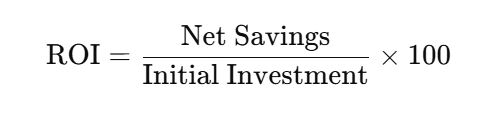
Where Net Savings = Total Savings – Initial Investment. For the example above:
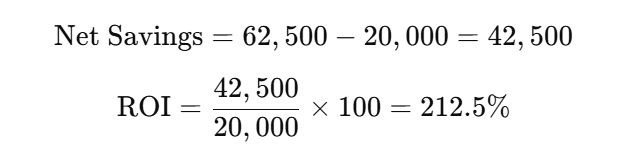
This means your investment would provide a 212.5% return over 25 years.
Impact of Location and Incentives
California’s high solar exposure and favorable financial incentives make it an excellent place for solar investment. However, factors such as local utility rates, net metering policies, and available tax credits can influence your ROI. Be sure to calculate your system’s production based on local solar conditions and consult with local solar providers for more precise quotes.
Common Myths and Misconceptions About Solar Panels
Solar energy is a transformative technology that promises environmental and financial benefits, but many misconceptions can make it seem less accessible or practical. It’s important to address these myths and set the record straight:
1. Myth: Solar Panels Only Work in Sunny Climates
One of the biggest misconceptions is that solar panels only work well in sunny, warm climates. While it’s true that sunny weather helps solar panels generate more electricity, they can still function efficiently in cloudy or cooler climates.
- Reality: Solar panels work by capturing both direct and diffused sunlight. Even on overcast days, they can still generate energy, though at a reduced efficiency. In fact, cooler temperatures often improve solar panel performance, as they avoid the inefficiency that heat can cause. Countries like Germany, known for its cloudy weather, are leaders in solar energy production.
2. Myth: Solar Panels Are Too Expensive
Another widespread myth is that solar panels are prohibitively expensive and out of reach for the average homeowner.
- Reality: The cost of solar panels has dropped significantly over the past decade. With various incentives, tax credits, and rebates available at local, state, and federal levels, the upfront costs have become more manageable. Furthermore, the long-term savings on electricity bills can offset the initial investment over time.
3. Myth: Solar Panels Are Only for New Homes
Many people think solar installations are only feasible for newly built homes, especially if the house doesn’t have the necessary infrastructure.
- Reality: Solar panels can be installed on most existing homes. Installation can be done on roofs or, in cases where roof installation isn’t ideal, on the ground with the help of special structures like solar carports or canopies. Even older homes can be retrofitted to support solar systems.
4. Myth: Solar Panels Will Completely Eliminate Your Electricity Bill
Some people believe that installing solar panels will result in no more electricity bills.
- Reality: While solar panels can drastically reduce electricity costs, it’s unlikely they will eliminate your electricity bill entirely. Several factors such as the size of the system, your energy usage, local climate, and whether you’re connected to the grid, influence how much of your bill is offset. Many people still need to rely on the grid during cloudy days or at night.
5. Myth: Solar Panels Can’t Power Your Home During a Power Outage
It’s commonly thought that solar panels will continue providing power even when the grid goes down.
- Reality: In most cases, solar systems connected to the grid won’t provide power during an outage unless you have battery storage or a backup system in place. A complete solar power system, including batteries or a generator, can enable off-grid power during blackouts.
6. Myth: Solar Panels Will Damage Your Roof
Some homeowners worry that solar panels will damage their roof, leading to leaks or structural issues.
- Reality: Properly installed solar panels are designed not to harm your roof. In fact, they can even protect it from weather elements. Installation companies carefully assess roof integrity before installation. If a roof requires repair, those issues are addressed first. Solar panels are typically mounted using brackets or ballast systems that won’t cause leaks.
7. Myth: Solar Panels Are Fragile and Easily Damaged
Another misconception is that solar panels are easily damaged by weather, such as hailstorms or heavy snow.
- Reality: Solar panels are built to withstand harsh weather conditions. They are tested for durability and can typically resist impacts like hailstones the size of golf balls. Moreover, they are designed to endure wind speeds of up to 140 mph.
8. Myth: Solar Panels Are Unattractive
Aesthetic concerns often deter people from considering solar energy, with the belief that solar panels are bulky or ugly.
- Reality: Modern solar panels have sleek, low-profile designs that integrate well with a home’s appearance. There are also alternatives like solar roof tiles and solar carports that blend seamlessly into the environment. For those still concerned about aesthetics, there are solar skins available that can cover panels to match a building’s design.
By debunking these common myths, it’s easier to see that solar energy is not only viable but an increasingly practical solution for homeowners seeking to reduce energy costs and their environmental impact.
How to Choose the Right Solar Panel Installer

Choosing the right installer is crucial for ensuring that your solar panels are installed efficiently, safely, and in a way that maximizes your system’s performance. Here are some key factors to consider when selecting a solar installation company for your 4,000 sq. ft. home:
Look for Certification and Experience
When selecting a solar installer, you want a company with the necessary certifications and experience. The best companies should have a Certified Solar Installer credential, often granted by organizations like the North American Board of Certified Energy Practitioners (NABCEP). This certification ensures that the installer is knowledgeable and adheres to high-quality standards.
Additionally, check how long the company has been in business. A well-established company with years of experience is more likely to have a solid track record of successful installations and customer satisfaction.
Check Customer Reviews and References
Do some research on the installer’s reputation by reading customer reviews. Online reviews on platforms like Google or Yelp can give you an idea of what to expect. You can also ask the installer for references from previous clients. Speaking to past customers will help you gauge the company’s professionalism, the quality of their work, and how they handle issues post-installation.
Inquire About Warranties and Guarantees
A reliable solar installer will offer warranties on both the equipment and the installation. Be sure to ask about the specific warranties for the panels, inverters, and batteries. For instance, most solar panels come with a 25-year performance warranty, while inverters usually offer 10 to 12 years of coverage. Additionally, inquire about the installer’s workmanship warranty, which can cover errors in installation that could affect system performance.
Ask About the Installation Process
Understanding the installation process is key to ensuring a smooth experience. Ask the installer about the timeline from consultation to installation and the steps involved, including any permits or inspections needed. A good installer should be transparent about the whole process and keep you informed every step of the way.
Ensure Post-Installation Support
Solar systems require regular maintenance to function efficiently. When choosing an installer, make sure they offer post-installation support. This includes regular system monitoring, maintenance, and troubleshooting services. Some companies even offer performance guarantees, where they monitor the energy output of your system and ensure it meets expectations.
If you’re looking for expert, reliable solar panel installation, Gecko Solar Energy can help you every step of the way, from choosing the right system to professional, hassle-free installation. Contact us today at +1 619 826 6600 or email hello@geckosolarenergy.us for a free consultation!

Conclusion
Solar energy is not just an environmentally friendly choice; it’s a smart financial decision that can lead to long-term savings for your home. By understanding the costs, benefits, and available incentives for solar panel installation, especially for large homes like a 4,000 sq. ft. house in California, you can make an informed decision that benefits both your wallet and the planet.
Ready to make the switch to clean, renewable energy? Gecko Solar Energy is here to help you with personalized solar solutions that meet your home’s unique needs. Contact us today at +1 619 826 6600 or hello@geckosolarenergy.us to schedule your free consultation and take the first step towards a greener, more sustainable future!

